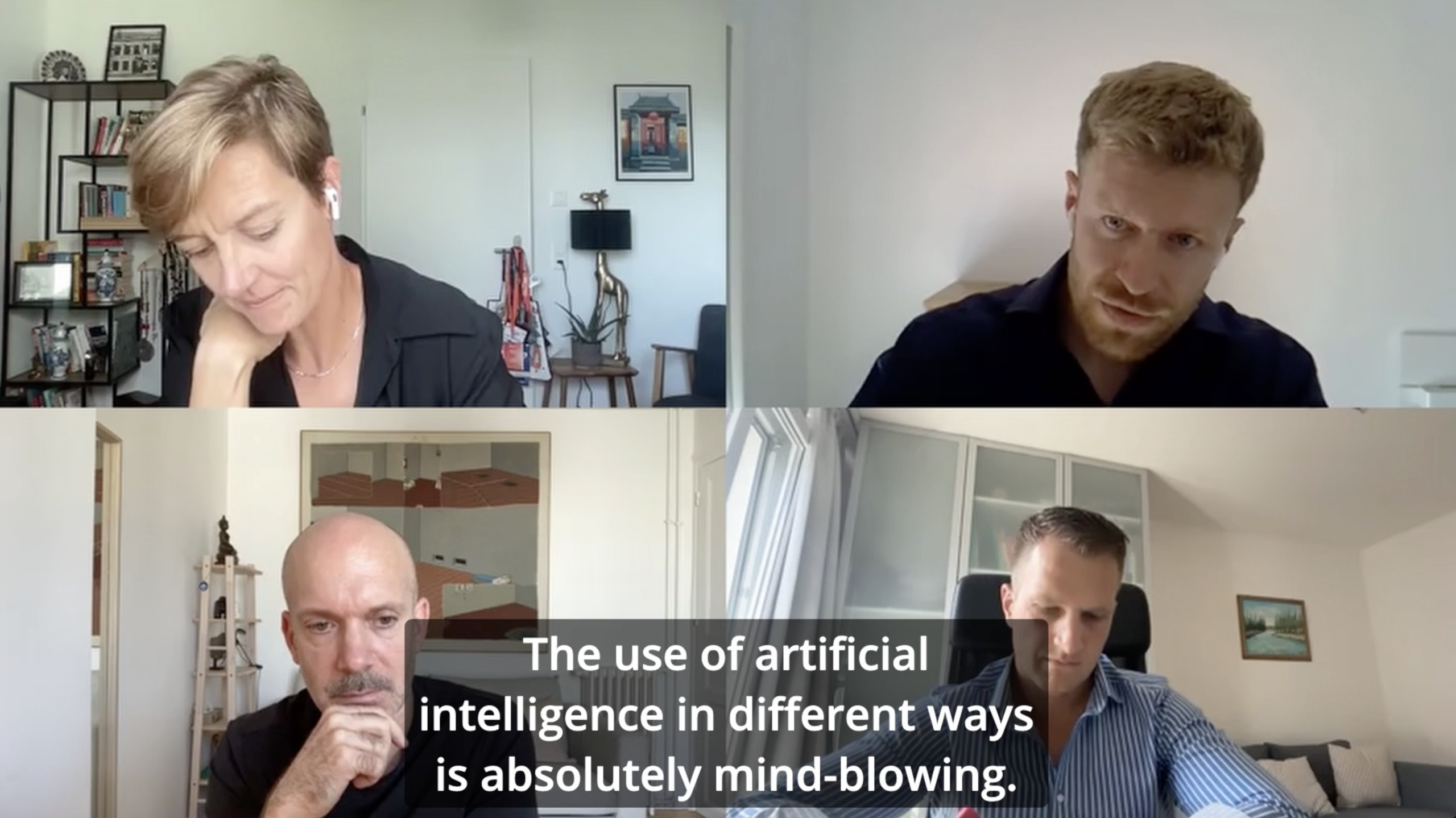
Sol Cinosi, our Chief Government and Corporate Affairs Officer, on what the cooperation actually involves, why the partnerships matter operationally, and how trust with investigative agencies gets built.
Law enforcement cooperation is the part of blockchain intelligence that vendors describe least precisely. Agencies are told a firm “works with law enforcement” without ever learning what that means in a live case: who traces, who decides, who signs the report, and who calls the exchange at 2am when the funds start moving. Sol Cinosi, our Chief Government and Corporate Affairs Officer and a lawyer who helped create the crypto-asset task force at the Buenos Aires prosecutor’s office, describes the cooperation in operational terms, and the description is worth reading closely if your unit is deciding whether to bring in a private forensic partner.
What does Recoveris actually do for law enforcement?
The support splits into four concrete capabilities. Recoveris provides tracing capabilities for investigations involving virtual assets, financial intelligence on the entities behind the addresses, wallet monitoring that flags movement while a case is open, and assistance with address blocking so tainted funds can be stopped at the services that hold them.
Underneath those four sits the tooling. We develop proprietary tools that automate repetitive tasks and speed up information analysis, which is a resourcing argument rather than a technology argument: every hour an investigator spends copying addresses between a graph tool, a spreadsheet, and a case file is an hour not spent on the analytical work only that investigator can do. Sol makes the point directly in the video, and it is the same logic that drives our AI investigator programme.
The scale of the gap is documented outside our own casework. INTERPOL’s African Cyberthreat Assessment 2026 found that 94% of responding agencies say they lack the digital forensics tools to keep up, and it names crypto-asset tracing among the scarcest skills available to them. Capability transfer, not just case support, is a large part of what a private partner is for.
Who leads the investigation, the agency or the vendor?
The agency leads. This is the single most important sentence in the interview, and it is a deliberate position rather than a courtesy. Law enforcement leads the investigations and makes the decisions; Recoveris is there to support them with technology, specialized knowledge and analytical capability. Our Managed Investigations documentation for law enforcement says the same thing in procurement language: Recoveris provides tracing and technical intelligence while the agency retains investigative authority.
The most common failure mode in public-private crypto cooperation is ambiguity about who decides. A vendor that positions itself as running the case creates a chain-of-custody problem, an evidentiary problem, and eventually a political problem for the unit that engaged it. Agencies are right to be sceptical of any pitch that promises to take the case off their hands. What they should be looking for is a partner that produces court-grade material, an Initial Tracing Report inside 24 hours, expert witness testimony when it comes to that, and a clear record of who did what.
Being explicit about that boundary is also, in our experience, what makes the relationship durable. Once a prosecutor knows that the forensic partner will not step in front of them, the cooperation stops being a risk to manage.
How does an agency come to trust a private forensic firm?
Through one case at a time. Sol is unambiguous about how the current relationships were built: many of the relationships Recoveris has today with investigative agencies began by working together on a specific case, where the team could demonstrate technical capability and the value it brings to an investigation.
This is worth stating plainly because it contradicts how the market usually sells to the public sector. Framework agreements, procurement portals and multi-year tool licences are how vendors would prefer the relationship to start, and they are almost never how it does. An agency gives a firm one hard case, watches what comes back, and decides from there. Trust is built through consistent work and results, which means the first deliverable matters more than the pitch deck that preceded it.
The corollary is that the education layer comes before the case in many jurisdictions. A meaningful share of our government work is training rather than tracing, delivered with the OSCE across 11 countries, with INTERPOL and EUROPOL, and with agencies including Italy’s Guardia di Finanza. The curriculum covers advanced obfuscation analysis, hardware wallet seizure, Golden Hour freezing protocols and cross-border OSINT, and Sol is one of the lead instructors. Units that go through it come back with better-scoped requests, which makes the eventual casework faster for everyone.
Why do the partnerships and network memberships matter?
They matter on two levels, and only the second one is operational.
The first is credibility. Being part of certain associations, initiatives and collaboration networks means meeting high standards of professionalism and commitment in the fight against financial crime. Admission is a signal, and for an agency doing due diligence on a private partner it is a cheap and reliable one.
The second is access, and this is where it stops being symbolic. Crimes involving virtual assets are mostly international, so having trusted relationships in different countries makes it possible to coordinate actions quickly and achieve far more effective results than working in isolation. In practice that means a global network of public bodies, VASPs and specialized private companies that can be reached in hours rather than through mutual legal assistance timelines.
Concretely, Recoveris holds blacklisting access across the 190+ members of the VerifyVASP network, and we are the only blockchain investigative firm admitted to it. We operate inside IVAN, the Illicit Virtual Asset Notification network connecting US federal agencies with 35+ partner organizations, and inside the Crypto Defenders Alliance and Operation Crypto Shield, the latter initiated by Abu Dhabi’s Secure Communities Forum with INTERPOL. Those channels are what turn a traced address into a freeze request that lands at the receiving exchange while the assets are still there.
Does the network actually change outcomes?
Our own numbers say yes, and they are the proprietary part of this argument. In our incident-response deployments with global centralized crypto exchange, we achieve up to 27% freeze rate, which is an unusually good one to anyone inside the industry.
The single clearest illustration came in May 2026, when our team drove a USD 10.5M freeze that enabled one of the largest crypto seizures in Swiss history. That outcome depended on the freeze channel and the relationships behind it far more than on the tracing itself, and the tracing was not the hard part.
Speed is the whole mechanism. Once stolen funds reach a mixer such as Tornado Cash, or move through a bridge into a chain where the receiving service has no cooperation history with your jurisdiction, the window closes. Working in isolation on a cross-border case is how you lose it.
The takeaway
Public-private cooperation in crypto investigations works when the division of labour is explicit: the agency holds the mandate and the decisions, and the private partner brings tracing capability, freeze channels, and the analytical hours the unit cannot staff internally. Every durable relationship we have started with one case that proved the second half of that sentence.
If your unit is handling crypto-related cases and needs tracing capacity, freeze distribution, or court-grade forensic reporting, schedule a confidential consultation with Recoveris.