The recent shocking Louvre heist—Napoleon’s crown jewels taken in under 10 minutes by chainsaw-wielding “construction workers”—reminds us why traditional asset theft is extremely difficult to reverse.
While one item was recovered during the escape, the remaining pieces will likely be dismantled, gemstones recut, melted down, and laundered through shell companies and free ports across multiple jurisdictions, possibly never to be recovered.
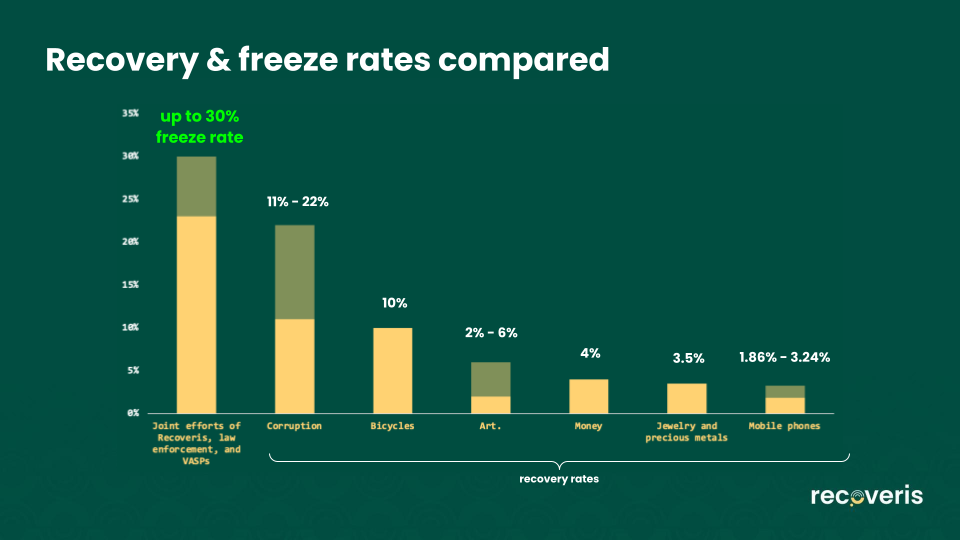
Meanwhile, in the recent pilot project in which we participated with a major digital assets player, Recoveris achieved close to 30% freeze rate on compromised digital assets. While a freeze isn’t the final recovery, it’s the decisive intervention that stops funds in their tracks and creates the window for legal action and asset retrieval.
What Makes the Difference
🔍 Blockchain transparency – Stolen funds leave traces that physical assets simply don’t
⚡ Speed matters – Crypto investigations can begin almost immediately, within hours, not days or weeks
🌐 Real-time coordination – Cross-border collaboration happens instantly, not through years of diplomatic channels
🛡️ Specialized forensics – Expert teams can follow funds through mixers and obfuscation layers where trails would otherwise go cold
The Numbers Tell the Story
- Art theft recovery: 2-6% (FBI Law Enforcement Bulletin)
- Jewelry: 3.5% (FBI Crime Statistics 2019)
- Money scams: 4% (GASA & Feedzai Report 2024)
- Mobile phones: 1.86-3.24% (Metropolitan Police Data)
- Digital assets with specialized intelligence: Up to 30% freeze rate.